Whenever a major IPO enters the market, investors face the exact same question: are we paying for a genuinely sound business, or simply funding market hype? That dilemma feels particularly relevant today. Across global markets, capital is pouring into artificial intelligence companies at valuations that demand years of flawless execution, many of which generate minimal profit and are still striving to validate their business models. In essence, investors are paying tomorrow’s inflated prices today.
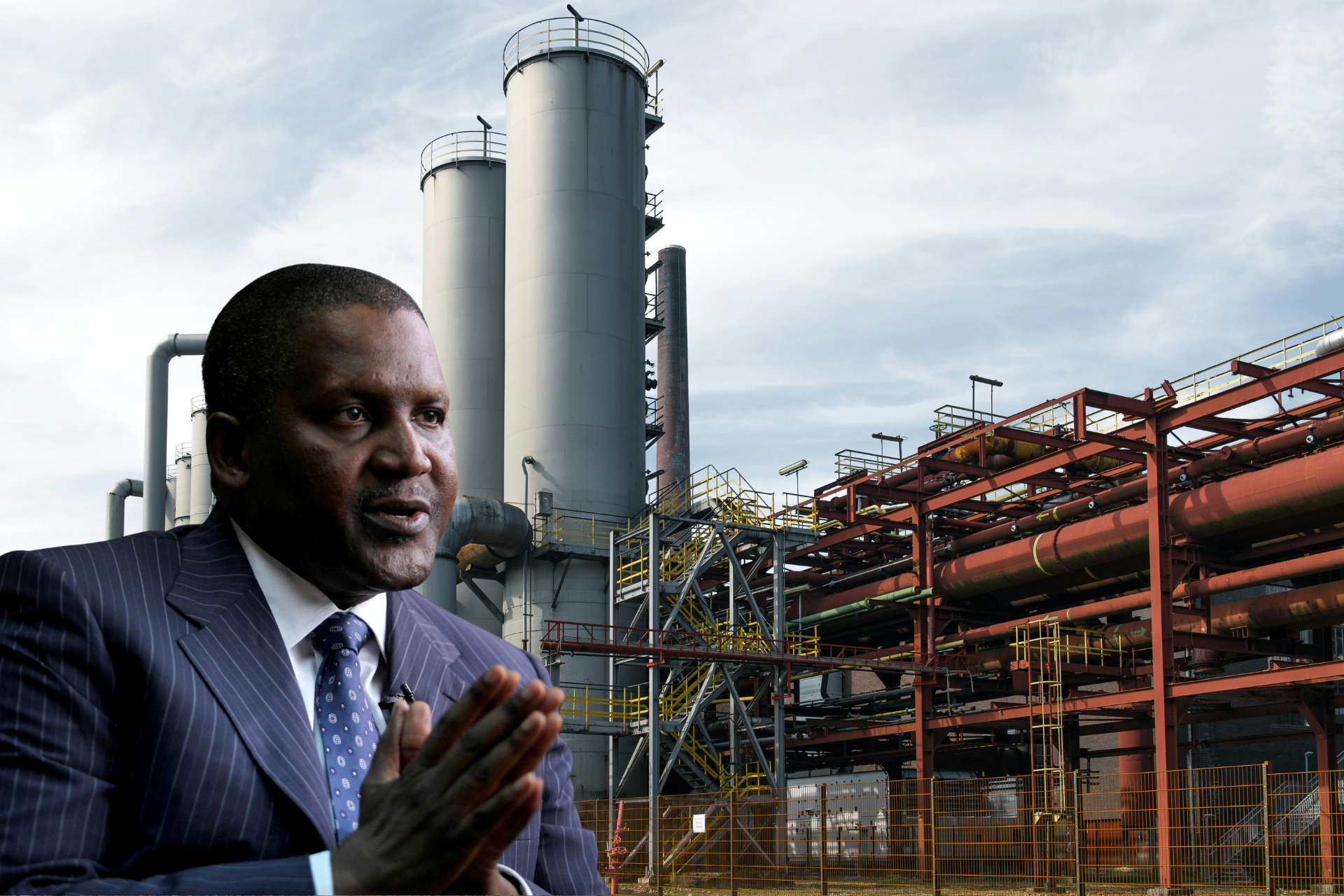
The Dangote Petroleum Refinery IPO presents a fundamentally different proposition. This is not a speculative bet built around future possibilities; it is a business anchored in a tangible, world-scale asset that is already fully operational and generating massive cash flow. More importantly, it operates within one of humanity’s most essential industries – Energy. While analysts can debate which tech firm will dominate a decade from now, few would argue whether the world will still run on fuel in the near term.
A Business Everyone Understands
One of the primary attractions of this IPO is its straightforward commercial model. The refinery purchases crude oil and processes it into vital everyday products: petrol, diesel, aviation fuel, LPG, and petrochemicals. Demand for these outputs is far from theoretical. Cars require petrol, industrial manufacturing relies on diesel, airlines need jet fuel, and households depend on cooking gas. Even as global economies gradually integrate cleaner energy alternatives, petroleum products remain irreplaceable across global logistics and industrial production, meaning investors don’t need heroic behavioural assumptions to justify the demand curve.
The Largest Refinery in Africa
In the refining sector, scale is everything. Larger facilities process crude far more efficiently, spreading fixed operating costs across massive production volume. The Dangote Refinery currently processes approximately 650,000 barrels per day (bpd) with stress-tested capacity closer to 700,000 bpd, making it Africa’s largest refinery and one of the premier single-train facilities globally. What makes the investment thesis even more compelling is management’s plan to expand capacity to roughly 1.4 million bpd in the coming years. Buying into this IPO isn’t just acquiring a stake in an existing operational marvel; it is an entry into a complex destined to become one of the world’s largest industrial platforms.
Benefiting from Global Energy Tensions
The current macroeconomic situation further underscores the refinery’s strategic timing. Recent geopolitical friction in the Middle East involving Iran, Israel, and the United States has continually disrupted energy markets throughout 2026, driving Brent crude into volatile trading cycles. For refiners, these supply chain bottlenecks and inventory drawdowns often expand refining margins significantly. Dangote’s recent financial performance reflects this exact dynamic, reporting approximately $1.82 billion in profit for the first half of 2026. While geopolitical instability should never be the sole pillar of an investment thesis, strategic energy assets historically perform exceptionally well when global markets become unpredictable.
Far Beyond a Local Narrative
It is a mistake to view the refinery purely as a domestic Nigerian play. While Nigeria consumes massive fuel volumes, the facility’s addressable market spans the broader continent, where limited refining infrastructure forces heavy reliance on expensive imports. By positioning itself to supply West Africa and export to broader international buyers, the growth story shifts from serving a single nation to solving a massive, structural continental energy deficit.
Navigating the Valuation
Caution remains necessary regarding pricing. Some critics point out that the proposed valuation of $47 billion to $50 billion appears aggressive when benchmarked against traditional global refiners. While that concern is valid on paper, standard valuation metrics often fail to capture the asset’s structural moats. Most global refiners do not sit inside Africa’s largest economy, nor do they enjoy the immense economic tailwinds of substituting billions of dollars in foreign fuel imports. Rather than valuing this strictly as a standard refinery, the market should evaluate it as a critical energy infrastructure platform at the center of a rapidly growing region.
Key Risks and Final Verdict
No investment is without risk. Short-term headwinds include crude oil price volatility, shifting government policies, and the execution risks inherent in expanding to 1.4 million bpd. Looking further out, the biggest terminal risk to an asset of this scale isn’t standard industry competition, but rather a drastic technological leap in clean energy—such as quantum energy or next-generation power becoming readily available, commercially scalable, and significantly cheaper than traditional fossil fuels.
Yet, balancing these long-term technological horizons against current global realities, the refinery’s scale, strategic moat, strong profitability, and dominant market position are nearly impossible to replicate. I see a high-cash-flow business grounded in fundamental demand, offering a compelling structural opportunity for long-term investors.
My View: Buy. Not because it is risk-free or guaranteed to double overnight, but because securing an early stake in Africa’s premier industrial asset at the start of its public market journey represents one of the most compelling investment opportunities available in the region today.