When most people think about investing, bonds are not top of mind. They think about stocks – prices rising and falling, dividend announcements, earnings reports, and the possibility of finding the next big winner before everyone else does. Rarely does anyone acknowledge the bond market, even though bonds make up one of the largest and most important segments of the financial system.
The lack of attention is understandable. Bonds do not generate the same excitement as stocks, and discussions about them often become buried under technical terms that make them seem more complicated than they really are. Yet governments rely on them to raise money, companies use them to fund expansion, and institutional investors hold them as a core part of their portfolios. More importantly, the bond market influences borrowing costs, interest rates, and even the valuation of stocks.
Bonds are far easier to understand than many people think. In fact, if you understand how a loan works, you already understand the basic idea behind a bond.
A Bond Is Simply A Loan
If a friend approaches you with a business idea needing ₦1 million to get it off the ground, rather than taking a bank loan. In return, they promise to pay you interest every year and repay the full ₦1 million after a fixed period.
At its core, that arrangement is what a bond represents. When investors buy bonds, they are effectively lending money to an organisation in exchange for regular interest payments and the promise that their original investment will be returned at a future date. The organisation borrowing the money might be a government, a company, or another institution, but the principle remains exactly the same.
This is where bonds differ from stocks. When you buy shares in a company, you become a part-owner of that business and participate in its future growth and profitability. When you buy a bond, however, you are not becoming an owner. Instead, you are acting as a lender, providing capital that the issuer agrees to repay according to specific terms.
Why Do Governments And Companies Issue Bonds?
Large organisations constantly need funding, whether to finance new projects, expand operations, refinance existing obligations, or support day-to-day activities. Governments, for example, may issue bonds to fund infrastructure projects such as roads, rail networks, schools, and hospitals, while companies may use bond proceeds to build new factories, invest in growth initiatives, or strengthen their balance sheets.
Rather than relying entirely on bank loans, these organisations can raise money directly from investors through the bond market. In exchange for access to that capital, they commit to paying investors interest over a specified period before eventually returning the principal amount borrowed.
How Does A Bond Work In Practice?
Suppose the Federal Government issues a bond with a face value of ₦100,000, an annual interest rate of 15%, and a maturity period of five years. An investor who purchases that bond would receive ₦15,000 in interest each year and, at the end of the five-year period, would receive the original ₦100,000 investment back.
The interest paid on a bond is commonly known as the coupon, while the date on which the issuer repays the principal is known as the maturity date. Although these terms sound a bit technical, they simply describe the two things every bond investor wants to know: how much income they will receive and when they will get their money back.
The Bond Market
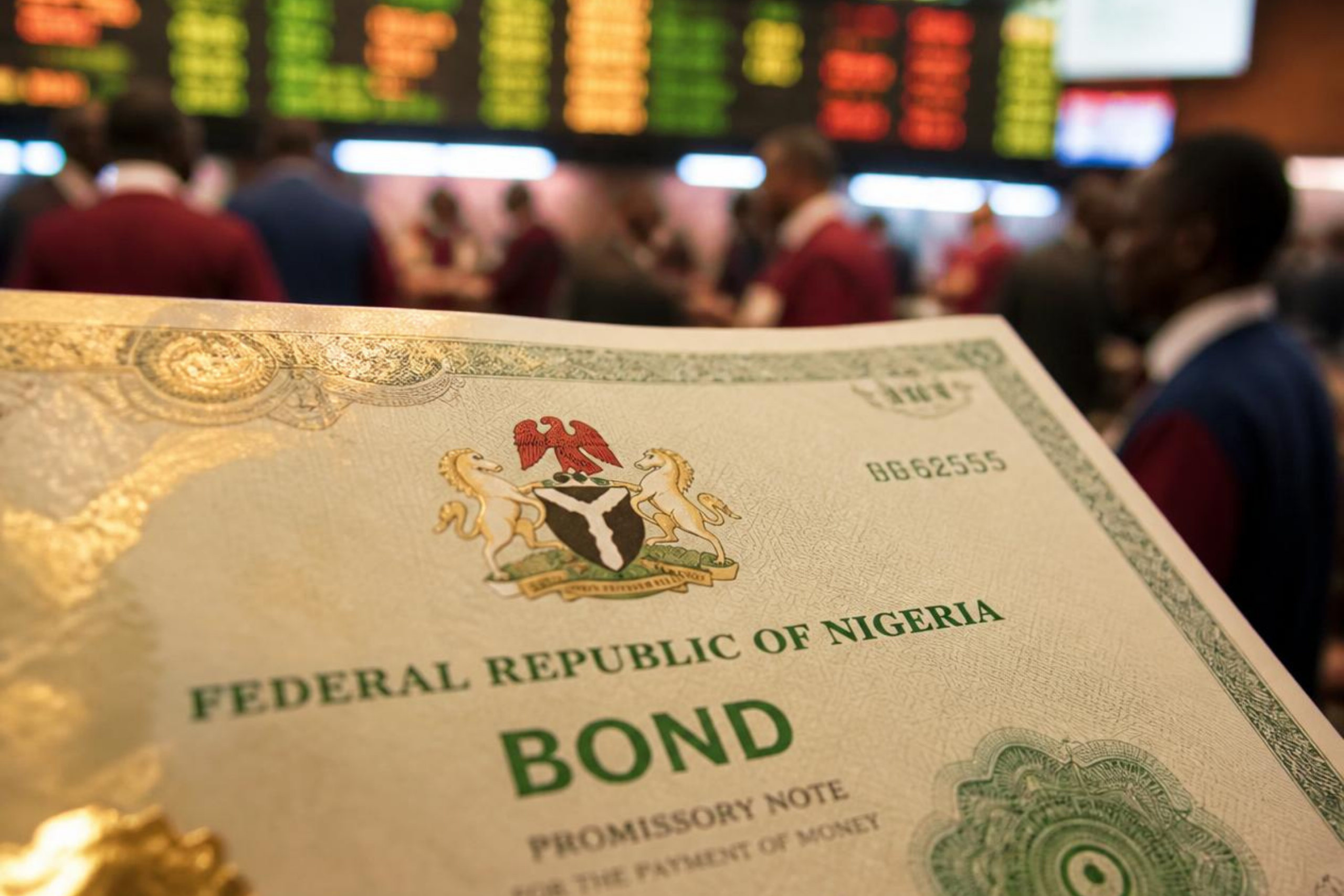
The bond market is the marketplace where bonds are issued and traded. When a government or company sells a bond for the first time, that transaction takes place in what is known as the primary market. Once the bond has been issued, investors are free to buy and sell it among themselves in the secondary market.
This distinction is important because many new investors assume that bonds must be held until maturity. In reality, bonds can change hands multiple times before they expire, which means they have market prices that fluctuate over time. As a result, investors can earn returns not only from interest payments but also from changes in the bond’s price.
One of the most important things to understand about bonds is that their prices are closely linked to interest rates. If you own a bond paying 12% interest and newly issued bonds begin offering 18%, your bond immediately becomes less attractive to potential buyers. To compensate for that lower interest rate, its market price will usually fall.
The reverse is also true. If you own a bond paying 18% and new bonds are issued at 12%, your bond suddenly looks much more appealing because it offers a higher income stream. Investors may therefore be willing to pay a premium for it, causing its market price to rise.
This relationship sits at the heart of the bond market and explains why investors pay close attention to interest-rate movements. As a general rule, bond prices tend to fall when interest rates rise and rise when interest rates fall.
How Can Retail Investors Invest In Bonds?
For retail investors, bonds can seem out of reach because they are typically associated with institutional investors: pension funds, insurance companies, and other large corporations. In reality, individual investors can also participate in the bond market, although the process is not always as straightforward as buying shares.
One option is to invest directly in Federal Government of Nigeria (FGN) Bonds when new issuances are offered to the market. Investors can typically access these offerings through authorised financial institutions, including stockbroking firms, investment banks, and other licensed market operators that facilitate subscriptions on behalf of clients.
Retail investors can also purchase existing bonds in the secondary market through stockbrokers and fixed-income trading desks. This allows investors to buy bonds that have already been issued and are being traded between market participants, much like shares on the stock exchange.
For a more hands-off approach, mutual funds and other professionally managed fixed-income funds offer another route into the market. These funds pool money from multiple investors and invest across a range of bonds and other fixed-income securities, allowing investors to gain exposure without having to analyse and select individual bonds themselves.