
If you had put ₦100,000 into the Nigerian Exchange (NGX) at the start of 2026, you would have roughly ₦131,000 sitting in your portfolio right now — before even any dividend consideration.
And no, that is not a typo. Nigerian stocks (equities) have delivered one of the strongest performances globally this year, ranking first worldwide in dollar-denominated returns with a year-to-date surge of approximately 31%. The NGX All-Share Index (a simple metric for the Nigerian stock market performance) has consistently broken perception barriers, and foreign portfolio investors who fled during the 2023 currency crisis are returning in droves. In 2025 alone, foreign inflows surged by over 800% to approximately ₦1.12 trillion.
But here is the paradox: while the market is booming, the people who need wealth-building opportunities the most… everyday salary earners, small business owners, young professionals are still watching from the sidelines.
Why the NGX is surging
- Banking sector recapitalisation – The Central Bank of Nigeria’s push for banks to raise fresh capital has triggered a wave of investor optimism. Larger capital bases mean stronger banks, and stronger banks can lend more, earn more, and pay better dividends.
- Improved FX liquidity – The Naira has stabilised relative to the chaos of 2023–2024. While still volatile, the extreme currency swings that scared foreign investors have moderated, making Nigerian assets attractive again.
- Retail investor awakening – According to NGX data, retail investors traded ₦3.39 trillion in the first half of 2026, up 130.4% from the same period last year. Nigerians are finally realising the stock market’s potential.
How to start with ₦10,000
Contrary to popular belief, you do not need millions to invest. Here is the practical path:
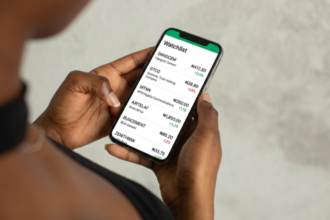
Step 1: Choose a stockbroking firm. You need a registered stockbroker to buy shares on the NGX. Look for firms regulated by the Securities and Exchange Commission (SEC). Many now offer mobile apps that let you open an account in minutes. Some popular, user-friendly options include Bamboo, Meristem, Trove, Hisa, and InvestNow .
Step 2: Complete your KYC. You will need a valid ID (national passport, driver’s licence, or NIN slip), proof of address, and a passport photograph. Most brokers now accept digital submissions.
Step 3: Fund your account. Transfer as little as ₦10,000 to your brokerage account. Some brokers have minimums, but many have dropped them to attract retail investors.
Step 4: Buy your first stock. As a rule of thumb for beginners, ‘blue chip’ stocks (shares of large, established companies with a history of profitability) are the safest starting point. Think Dangote Cement, MTN Nigeria, Guaranty Trust Holding Company, and Zenith Bank. These companies are unlikely to disappear overnight and typically pay dividends.
The risks nobody talks about
- The NGX swings are real. Stock prices can fall and rise dramatically. Companies can underperform. Currency risk also remains (If the Naira weakens and depreciates significantly), your dollar-adjusted returns could shrink.
- Leverage risk. Do NOT borrow money to invest. (ask Leopold Aschenbrenner)
- Do not invest money you need for rent or school fees. And do not put all your money in one stock. ₦10,000 can be split across two or three companies.
The bottom line
The Nigerian stock market is no longer an exclusive club for bankers in Lagos Island. It is becoming a genuine wealth-building tool for everyday Nigerians. But opportunity without education is dangerous. Start small, learn continuously, and think in years, not days.
Disclaimer: This article is for educational purposes only and does not constitute investment advice.Always consult a licensed investment advisor before making financial decisions.